

Plantar Fasciitis: Symptoms, Causes & Treatment (2026 Guide)
Tuesday, August 4, 2026
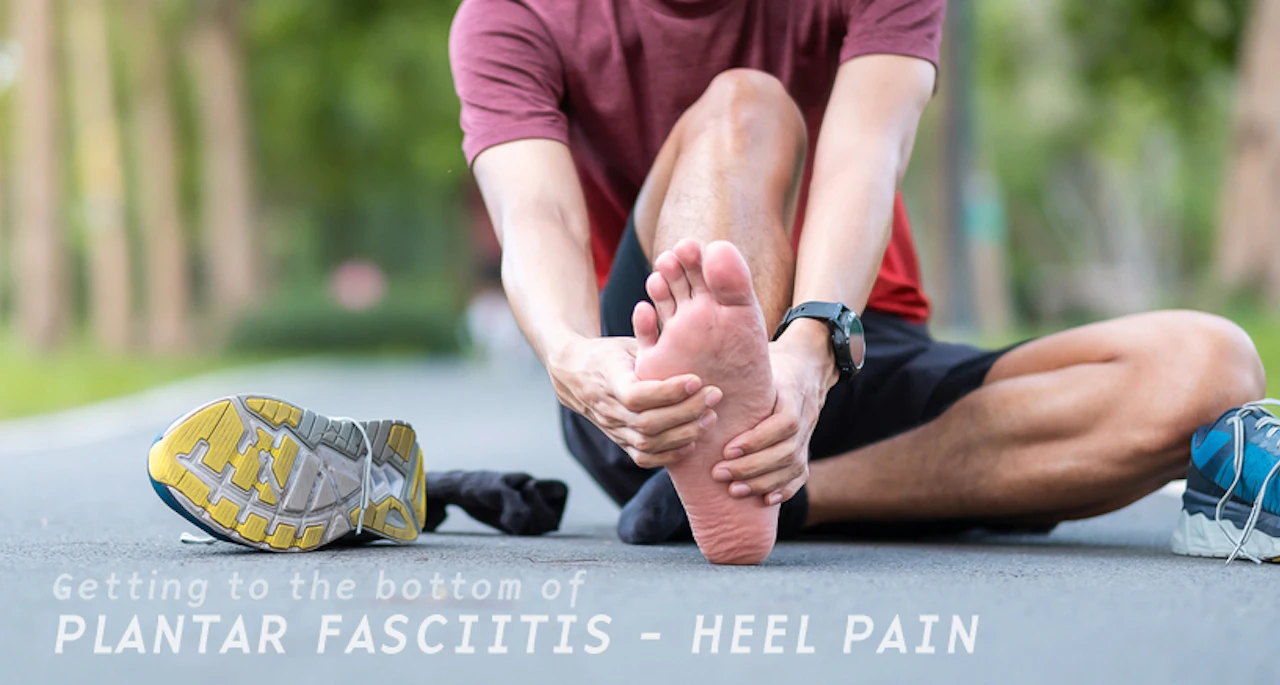
That stabbing pain under your heel with your first steps out of bed has a name: plantar fasciitis, one of the most searched heel pain complaints online. This guide covers what it feels like, why it develops, and the range of treatment options worth trying before you book a podiatry appointment with Foot Factor. Home care helps many people, but it's worth knowing when it's time for a professional opinion.
What Plantar Fasciitis Feels Like
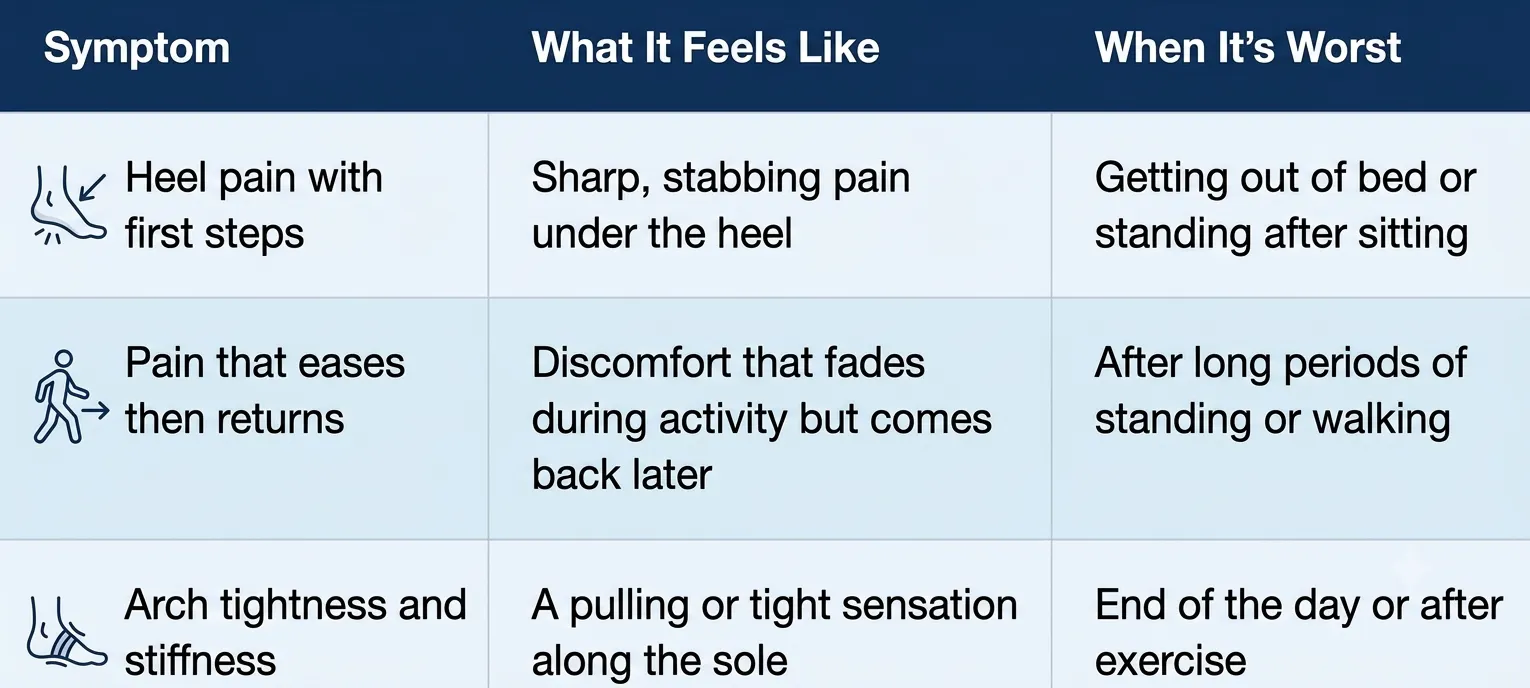
Plantar fasciitis has a fairly recognisable pattern once you know what to look for, though the intensity and exact location can vary from person to person. Most people describe a sharp or burning sensation under the heel rather than a dull, generalised ache. The table below breaks down the three symptom patterns that come up most often and when each usually shows itself.
Heel Pain That's Worst With Your First Steps
The pain that greets you the moment your foot hits the floor each morning is the single most reported symptom of plantar fasciitis, usually sharper than anything felt later in the day.
Pain After Rest, Not During Activity
Oddly, the pain often fades once you've been moving for a few minutes, only to creep back after you've been sitting or standing still again for a while.
Tightness and Stiffness Along the Arch
Alongside the sharp heel pain, many people also notice a tight, pulling sensation running along the arch, particularly after exercise or towards the end of a long day. If you'd like a deeper explainer on this, our guide to understanding plantar fasciitis covers the underlying mechanics in more detail.
What Causes Plantar Fasciitis
Plantar fasciitis rarely comes from a single cause. It usually builds gradually from a combination of factors putting repeated strain on the arch.
- A sudden increase in walking, running or standing
- Unsupportive footwear or worn-out soles
- Tight calf muscles limiting ankle movement
- Flat feet, high arches or other biomechanical factors
- Carrying extra weight, which adds steady load to the arch
Overuse and Activity-Related Causes
A sudden jump in activity, training for a race after months of inactivity, taking up a new sport, or simply spending far more time on your feet than usual, puts sudden strain on the plantar fascia before it's had time to adapt. Repetitive impact from running or standing on hard surfaces adds up over weeks rather than happening in a single moment. This is why the condition often develops gradually rather than appearing after one specific incident.
Footwear and Biomechanical Causes
Shoes with little arch support or worn-down cushioning force the plantar fascia to absorb more shock than it's designed for. Flat feet cause the arch to collapse further with each step, stretching the fascia repeatedly, while very high or rigid arches transfer impact straight through without much shock absorption at all. Tight calf muscles compound the problem, since limited ankle flexibility shifts extra strain onto the fascia with every stride. A gait analysis can help identify whether your walking or running pattern is contributing to the strain.
Weight, Age and Other Risk Factors
Extra body weight increases the load travelling through the arch with every step, which is why plantar fasciitis is more common in people carrying additional weight. Age plays a role too, with the condition appearing most often in adults between their forties and sixties as the fascia loses some of its natural elasticity. Jobs involving long periods of standing on hard flooring add a similar cumulative strain.
Treatment Options and How to Prepare for a Podiatry Visit
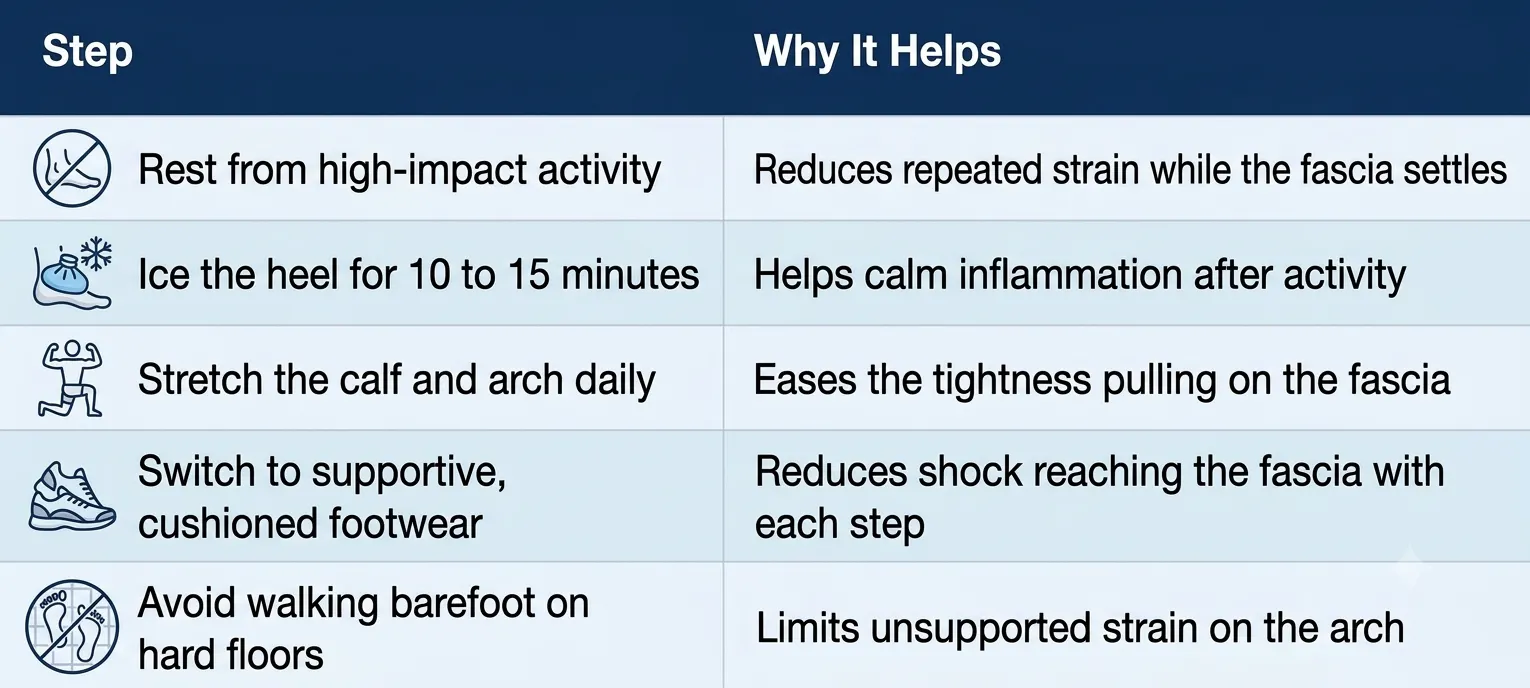
Most cases of plantar fasciitis respond well to a combination of home care and time, though persistent pain sometimes needs a closer look. The checklist below covers home treatment steps worth trying first, and the section after it explains when a podiatry visit becomes the better option.
Home Care and Self-Treatment Steps
A few extra steps are worth adding to the checklist above, particularly in the first few weeks.
- Rolling the arch over a frozen bottle or massage ball for a few minutes daily
- Wearing a night splint to keep gentle tension on the fascia while you sleep
- Taking over-the-counter anti-inflammatory medication where appropriate, following the packet guidance
- Gradually returning to activity rather than jumping straight back to previous training levels
Many people also find that custom insoles provide additional arch support that off-the-shelf options can't match, particularly for cases linked to flat feet or biomechanical imbalances.
When to See a Podiatrist
If home care hasn't made a real difference after several weeks, or the pain is severe enough to affect your daily walking, it's worth booking an assessment rather than continuing to self-treat. A podiatrist can confirm the diagnosis, rule out other causes of heel pain, and build a treatment plan suited to your specific situation. Knowing what happens at a podiatry appointment beforehand can make that first visit feel less daunting.
Signs Your Plantar Fasciitis Is Healing (Or Needs More Help)
Recovery from plantar fasciitis is rarely a straight line, but a few patterns suggest things are moving in the right direction.
- Morning pain is fading
- You can increase activity without flare-ups
- Pain isn't returning after rest
Morning Pain Is Fading
That sharp first-step pain becoming milder, or taking longer to appear, over several weeks is usually one of the earliest signs of genuine improvement.
You Can Increase Activity Without Flare-Ups
Being able to gradually add more walking, standing or exercise without the pain returning the next day suggests the fascia is coping better with load.
Pain Isn't Returning After Rest
If sitting or standing for a while no longer brings the pain straight back, that's a good indication the underlying irritation is settling down. You can read more about the condition on our dedicated plantar fasciitis condition page.
Ready to Get Your Heel Pain Assessed?
If home care hasn't shifted things after a few weeks, or you'd rather get a clear diagnosis from the start, booking with one of the podiatrists in your area is a sensible next step. Not sure who to choose? Our guide on finding the best podiatrist in London can help.
Frequently Asked Questions
What Does Plantar Fasciitis Pain Feel Like?
Most people describe it as a sharp, stabbing or burning pain concentrated under the heel. It's typically worst with the first few steps after getting out of bed or standing up after sitting for a while. The pain often eases once you've been moving for a few minutes, then can return after standing or walking for an extended period. Some people also notice a duller ache or tightness along the arch, especially later in the day.
How Long Does Plantar Fasciitis Take to Heal?
Most cases improve within three to six months with regular home care and activity adjustments. Mild cases can settle faster, sometimes within a few weeks, while more persistent cases can take longer, particularly if the underlying cause, such as unsupportive footwear or a sudden activity increase, hasn't been addressed. Sticking with stretching and load management even after the pain eases helps reduce the chances of it returning.
Can Plantar Fasciitis Go Away on Its Own?
Sometimes, especially in mild cases caught early and paired with rest and basic self-care. However, ignoring ongoing heel pain and continuing high-impact activity as normal often allows the irritation to persist or worsen rather than resolve. Without addressing the underlying cause, whether that's footwear, activity levels or tight calf muscles, the same pain pattern often comes back.
What Is the Fastest Way to Relieve Plantar Fasciitis Pain?
Icing the heel and resting from high-impact activity gives the quickest short-term relief for most people. Gently stretching the calf and the arch before getting out of bed can also reduce the intensity of that first-step pain. Over-the-counter anti-inflammatory medication may help in the short term, though it doesn't address the underlying cause. For longer-lasting relief, supportive footwear and a proper stretching routine matter more than any single quick fix.
What Shoes Are Best for Plantar Fasciitis?
Shoes with good arch support and cushioned heels generally work best while the fascia is healing. Look for a firm heel counter and enough cushioning to absorb impact, rather than very flat or minimalist styles that offer little shock absorption. Worn-out trainers with flattened soles are worth replacing, since reduced cushioning adds more strain to the fascia with every step. Some people also find added benefit from an over-the-counter or custom insole for extra arch support.
Is Walking Bad for Plantar Fasciitis?
Not necessarily, though how much and on what surface both matter. Gentle, regular walking in supportive shoes is generally fine and can even help circulation to the area, while long distances on hard pavement or a sudden jump in daily steps can aggravate symptoms. Listening to how your heel responds and easing off if pain increases is a reasonable approach. Barefoot walking on hard floors is usually best avoided while symptoms are active.
Do I Need a Referral to See a Podiatrist for Plantar Fasciitis?
No, most private podiatrists accept direct bookings for heel pain without requiring a GP referral first. This differs from many NHS pathways, where a referral is often needed before you can be seen, particularly for non-urgent cases. Booking privately can shorten the wait between noticing persistent heel pain and getting an actual diagnosis. Understanding the difference between NHS and private podiatry can help you decide which route suits your situation.
Can Plantar Fasciitis Come Back After Treatment?
Yes, it can return if the factors that caused it in the first place aren't addressed. Going back to high-impact activity too quickly, reverting to unsupportive footwear, or dropping a stretching routine once the pain has eased are common reasons it resurfaces. Keeping up with calf and arch stretches, choosing supportive shoes, and easing into activity increases gradually all help lower the chances of a repeat episode.